Your first visit should answer more than whether an MRI shows a tear: it should establish whether the finding explains your symptoms and whether surgery offers more benefit than rehabilitation or other treatment. By the time you leave the hospital, you should understand the tests, preparation, procedure, discharge rules and recovery plan attached to your specific diagnosis.
Key takeaways
- Your first visit connects symptoms and examination findings to a treatment decision.
- Ask which test supports the diagnosis and whether non-surgical treatment comes first.
- Confirm the exact arthroscopy procedure, anaesthesia plan and expected recovery milestones.
- Compare surgeon experience, hospital support, rehabilitation access and clear discharge instructions.
Your first appointment: from symptoms to a treatment decision
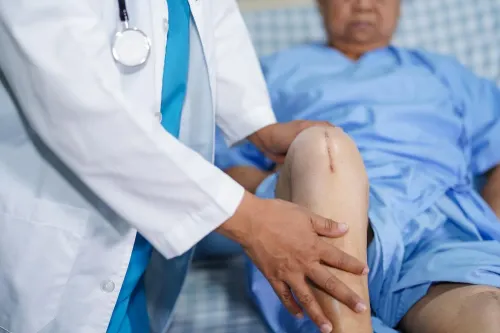
The first appointment links your symptoms to a treatment decision, not directly to surgery. If you searched “arthroscopy hospital for Hadapsar what happens”, expect the orthopaedic clinician to record when pain, locking, swelling or instability began, then ask about injury, activity, previous treatment and daily limitations.
The examination checks movement, strength, tenderness, alignment, and ligament or meniscus signs. The clinician reviews earlier reports, X-rays and MRI scans. Weight-bearing X-rays show alignment, joint-space loss and arthritis under load; MRI assesses the meniscus, ACL, cartilage, synovium and other soft tissues. An MRI finding alone is not an indication for surgery.
Arthroscopy may suit a mechanically significant meniscus tear, ACL tear, loose body, selected cartilage damage, synovitis or shoulder impingement. Uncomplicated knee osteoarthritis and many degenerative meniscal tears often begin with exercise-based physiotherapy, activity modification, weight management where relevant and pain treatment. The recommendation must match the scan with examination findings, symptoms and functional limitations.
| Appointment | Main question | Typical pathway |
|---|---|---|
| Arthroscopy | Is there a treatable mechanical or soft-tissue problem? | Targeted imaging, examination, possible keyhole treatment |
| Knee replacement | Is advanced joint damage limiting durable function? | X-rays, conservative care review, replacement planning |
| Fracture assessment | Is a bone injury urgent or unstable? | Immediate imaging, immobilisation or fracture treatment |
| Non-operative sports injury | Can healing and function improve without surgery? | Rehabilitation, activity changes and follow-up |
The urgency, imaging, goals and treatment pathway therefore differ between these appointments.
Tests, medicines and the plan for surgery day
After the surgeon recommends arthroscopy, the hospital reviews allergies, every medicine and supplement, aspirin or other blood thinners, diabetes treatment, heart and lung conditions, previous anaesthetic problems, and pregnancy possibility where relevant. Blood tests are ordered when your health, medicines or planned anaesthesia make them useful; they do not replace examination.
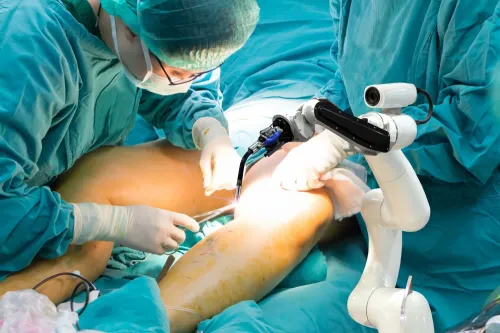
A pre-anaesthesia review considers the operation, medical history, examination findings and your preference. At an arthroscopy hospital in Hadapsar, minimally invasive surgery still requires anaesthesia, sterile preparation, monitoring and an operating theatre.
- Ask how long to fast and when to stop clear liquids if permitted.
- Ask which anticoagulant, aspirin, insulin or other diabetes medicine needs a clinician-directed plan; never stop medicines independently.
- Confirm arrival time and what to bring, including identification, medication details, allergy information and scans.
- Ask whether you need crutches or a brace.
- Arrange who will drive you home and who will stay with you afterward.
- On arrival, register, change into theatre clothing, complete identification checks and confirm consent.
- Staff place an intravenous line before theatre.
| Option | What it means | Decision factors |
|---|---|---|
| General anaesthesia | You are unconscious | Operation, health and preference |
| Regional anaesthesia | The limb or body region is numbed | Sometimes combined with local anaesthetic |
| Local anaesthetic | A small area is numbed while you remain awake | Selected procedures only |
What the operation involves and why procedure names matter
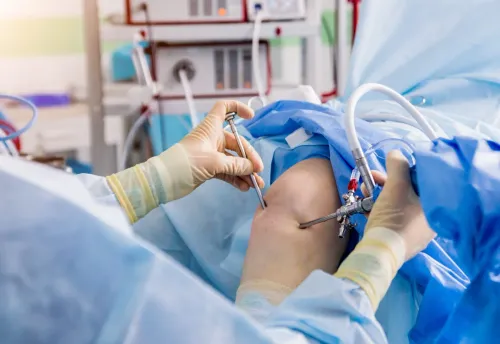
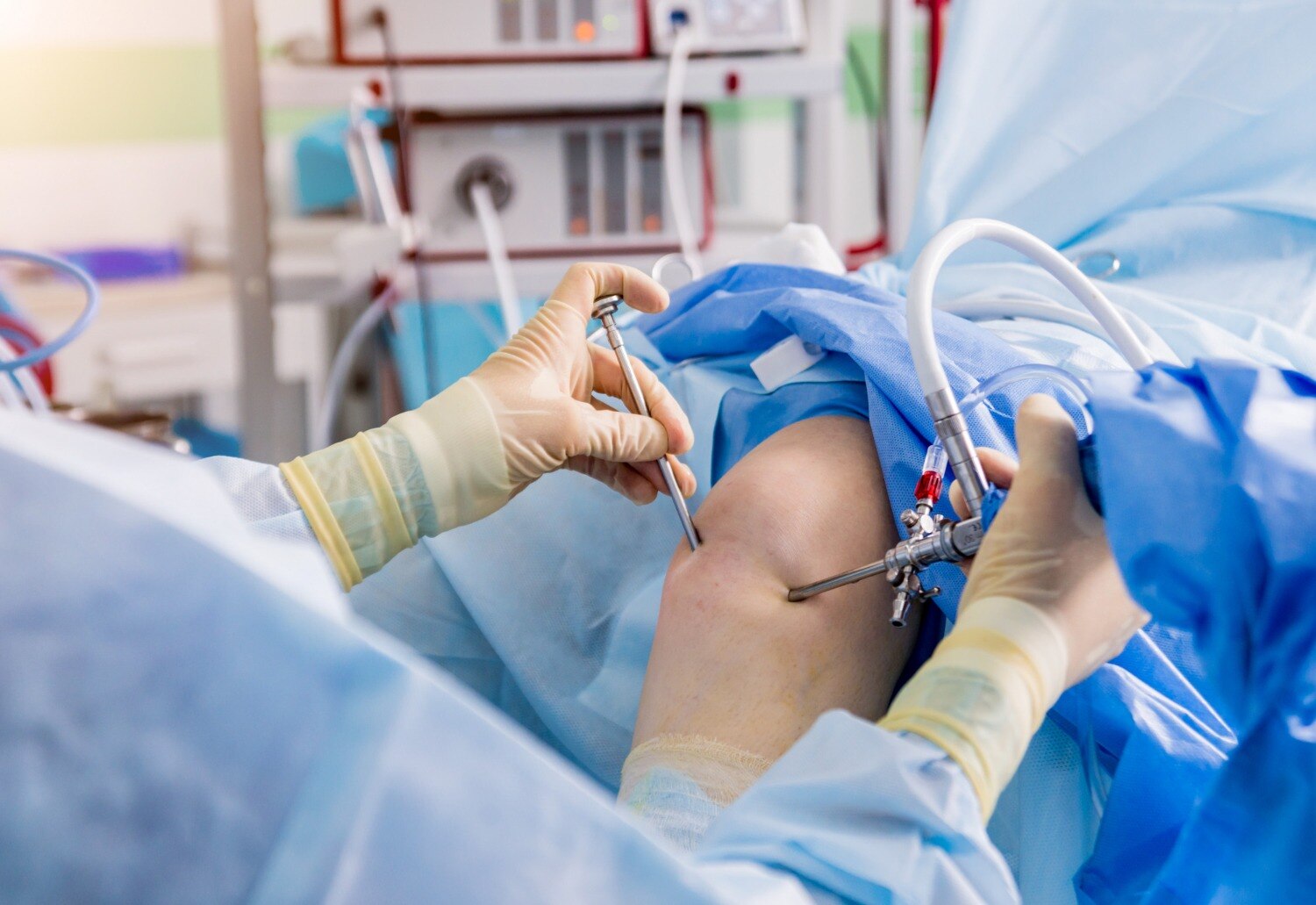
“Arthroscopy” describes the access method, not the operation or recovery. The arthroscopy surgery details depend on whether the surgeon inspects, trims, repairs or reconstructs tissue.
1. After consent and anaesthesia, the team positions the joint, cleans the skin and covers you with sterile drapes.
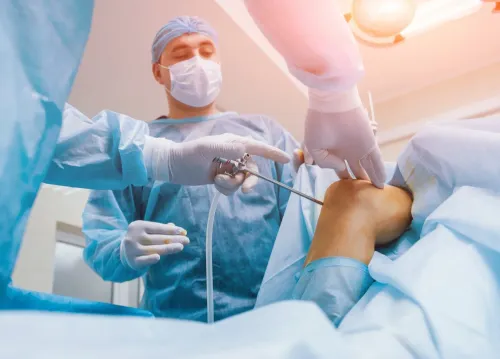
2. The surgeon makes small portal incisions. When needed, sterile fluid fills the joint to improve visibility.
3. A camera enters through one portal, while instruments pass through others. The surgeon inspects each joint compartment and confirms the problem before treating it.
4. Diagnostic arthroscopy may involve inspection without a major repair. Meniscus trimming removes unstable tissue; meniscus repair uses sutures or anchors to preserve suitable tissue and support healing.
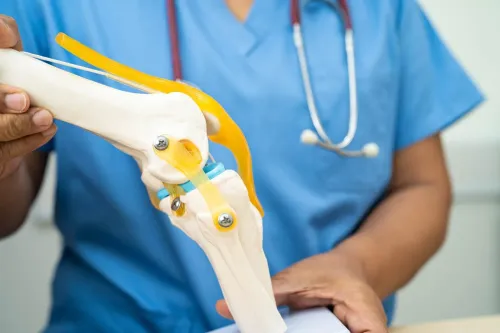
5. ACL reconstruction uses graft tissue and fixation to restore ligament stability. Cartilage treatment may smooth unstable cartilage or stimulate repair in selected defects; the surgeon can also remove loose bodies or treat inflamed synovium.
6. Findings can change the procedure within the boundaries of your consent. Ask what could be added, stopped or converted if the joint looks different from the scans.
7. The surgeon closes the portals, applies dressings and transfers you to recovery.
Do not use “arthroscopy” to predict your timetable. Trimming may allow earlier weight-bearing, while meniscus repair, cartilage treatment or ACL reconstruction may require a brace, crutches and restricted loading for weeks. Ask which exact procedure was performed and what restrictions apply.
Recovery, discharge and rehabilitation after arthroscopy
In recovery, nurses monitor breathing, blood pressure, pain, nausea, sensation and movement as anaesthesia wears off. Many knee arthroscopies are day-case procedures, but discharge follows only when vital signs are stable, symptoms are controlled and you can walk safely with prescribed crutches or another aid.
An adult escort or responsible person is required when the anaesthesia policy says so. Never drive yourself home after anaesthesia.
Your written instructions should specify:
- How to change the dressing and when bathing is allowed
- Which pain medicines to take and when
- How long to use ice and elevation
- Your weight-bearing limit
- Whether to wear a brace
- How to use crutches safely
- Your follow-up appointment and physiotherapy schedule
Early exercises target knee movement and quadriceps activation. Later rehabilitation follows tissue-healing restrictions and your work or sport goals. Return to sport should depend on strength, movement, swelling, stability and functional testing—not only the number of days since surgery.
Seek prompt assessment for increasing wound redness or warmth, pus, fever, severe or worsening pain, a swollen painful calf, chest pain or breathlessness. Recognised risks include infection, bleeding, persistent swelling, blood clots, stiffness, nerve or blood-vessel injury, anaesthesia complications and symptoms that fail to improve.
Small incisions reduce tissue disruption; they do not remove these risks.
How to compare an arthroscopy hospital and surgeon in Pune
Compare plans, not labels. Ask the knee arthroscopy surgeon in Pune to name the exact diagnosis, explain which non-operative options were considered, and state why surgery is preferable now. The recommendation should fit your symptoms, examination and functional limits, not an MRI report by itself.
Ask these questions at every consultation:
- What might you find, and does consent cover changing from meniscus trimming to repair or another procedure?
- What are the complication rates for this specific operation, and what is the reoperation policy?
- When can you bear weight, and will you need a brace or crutches?
- What physiotherapy milestones determine progress and return to work or sport?
- Who answers urgent questions after discharge, and where should you go at night?
- Which qualified orthopaedic, anaesthesia and physiotherapy professionals will manage your care?
Compare written answers across facilities rather than relying on “minimally invasive” wording. Small incisions do not prove sterile processing, infection control or emergency readiness.
| Check | Arthroscopy hospital Hadapsar option | Other Pune facility |
|---|---|---|
| Anaesthesia and preparation | Pre-operative assessment and anaesthesia service confirmed | Same documents and named service confirmed |
| Operating care | Operating theatre, sterile processing and infection-control process explained | Process and responsible team explained |
| After surgery | Observation, weight-bearing instructions and physiotherapy access stated | Same recovery pathway stated |
| Safety pathway | Complication advice and emergency contact supplied | Contact route and reoperation policy supplied |
You can assess Spire Hospital-Best Orthopedic Hospital in Pune using this same record, alongside any orthopedic doctor in Pune. Choose the operation only after the surgeon connects the proposed procedure to your examination findings and goals.
Related service
Orthopedic Treatments Best Arthroscopy Surgery Hospital in Bibwewadi, Dhankawadi, Market Yard, Kondhwa, Pune Spire Hospital is the Best Arthroscopy Surgery Hospital in Bibwewadi, Market Yard, Kondhwa, Undri, Swargate, Dhankawadi, Katraj, Ambegaon and Pune. View service → |
Frequently asked questions
What happens at the first appointment for arthroscopy?
The orthopaedic clinician records when pain, locking, swelling or instability began, asks about injury and previous treatment, examines the affected joint, and discusses how symptoms limit daily activities before recommending a treatment path.
What tests and medicines are discussed before arthroscopy surgery?
Your clinician explains the tests needed to confirm the diagnosis, reviews current medicines and allergies, and gives instructions for preparing safely for surgery day.
Why do arthroscopy procedure names matter?
Different procedures treat different problems. Confirm whether the plan involves inspection, repair, removal of damaged tissue or another named treatment, along with the anaesthesia and recovery implications.
What happens after arthroscopy surgery?
The care team monitors you before discharge, explains wound care and warning signs, reviews pain medicines and activity restrictions, and sets rehabilitation steps and follow-up appointments.
How should you compare an arthroscopy hospital and surgeon in Pune?
Compare the surgeon’s relevant joint experience, diagnostic and surgical facilities, anaesthesia and emergency support, rehabilitation arrangements, written cost information and the clarity of answers during consultation.
Keywords