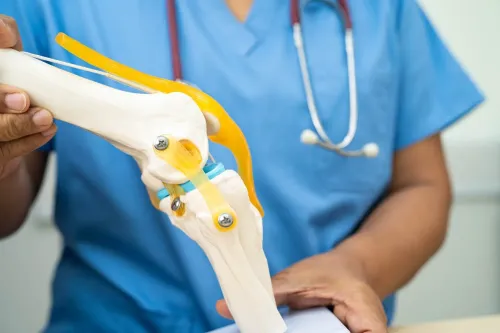
A twisting injury, repeated joint instability or a knee that locks can signal damage that needs more than home care, but not every painful joint needs arthroscopy. You will learn which injuries arthroscopy can address, when physiotherapy or another treatment is safer, what the operation involves and how recovery differs by procedure.
Key takeaways
- Seek assessment for locking, instability, persistent swelling or inability to bear weight.
- Arthroscopy suits problems inside a joint; it is not the answer for every injury.
- Ask about diagnosis, surgeon experience, anesthesia, rehabilitation and emergency support.
- Compare hospitals by infection control, imaging access, rehabilitation and clear follow-up plans.
Which joint injuries need an orthopedic assessment?
After a twisting injury, seek an orthopedic assessment if the joint locks, repeatedly gives way, stays swollen, cannot bear weight, loses movement or causes persistent pain. A mild sprain with improving pain, normal movement and no instability may settle with rest, ice, compression and gradual activity; worsening symptoms need examination.
An orthopedic doctor in Pune can assess whether the injury requires treatment beyond home care.
| Finding | What it suggests | Usual next step |
|---|---|---|
| Locking or inability to fully straighten | Meniscus or loose cartilage problem | Prompt orthopedic examination |
| Repeated giving-way | Ligament injury or joint instability | Stability testing and imaging |
| Persistent swelling or pain | Structural injury or significant inflammation | Assessment, even if walking is possible |
| Mild, improving soreness with full movement | Minor sprain | Short period of home care and monitoring |
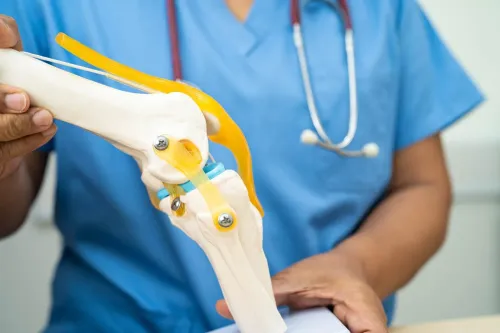
Knee arthroscopy may treat selected ACL and PCL tears, repairable meniscus tears and focal cartilage defects. Shoulder arthroscopy may address labral tears, recurrent dislocation and selected rotator-cuff problems. Ankle arthroscopy can treat certain cartilage injuries; hip arthroscopy is reserved for selected conditions confirmed by examination and imaging.
A scan alone does not choose treatment. Symptoms, stability, age, activity goals, tear pattern and cartilage condition matter. A meniscus tear is not automatically a surgical problem; when repair is suitable, preserving meniscal tissue is preferred to removing it.
When is arthroscopy the right operation—and when is it not?
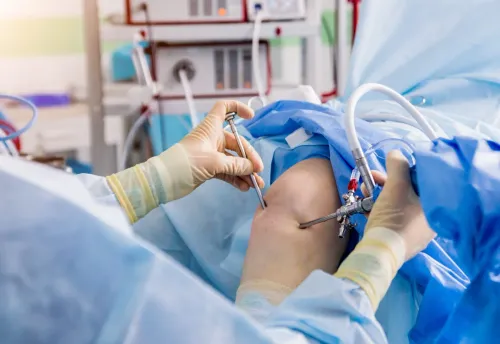
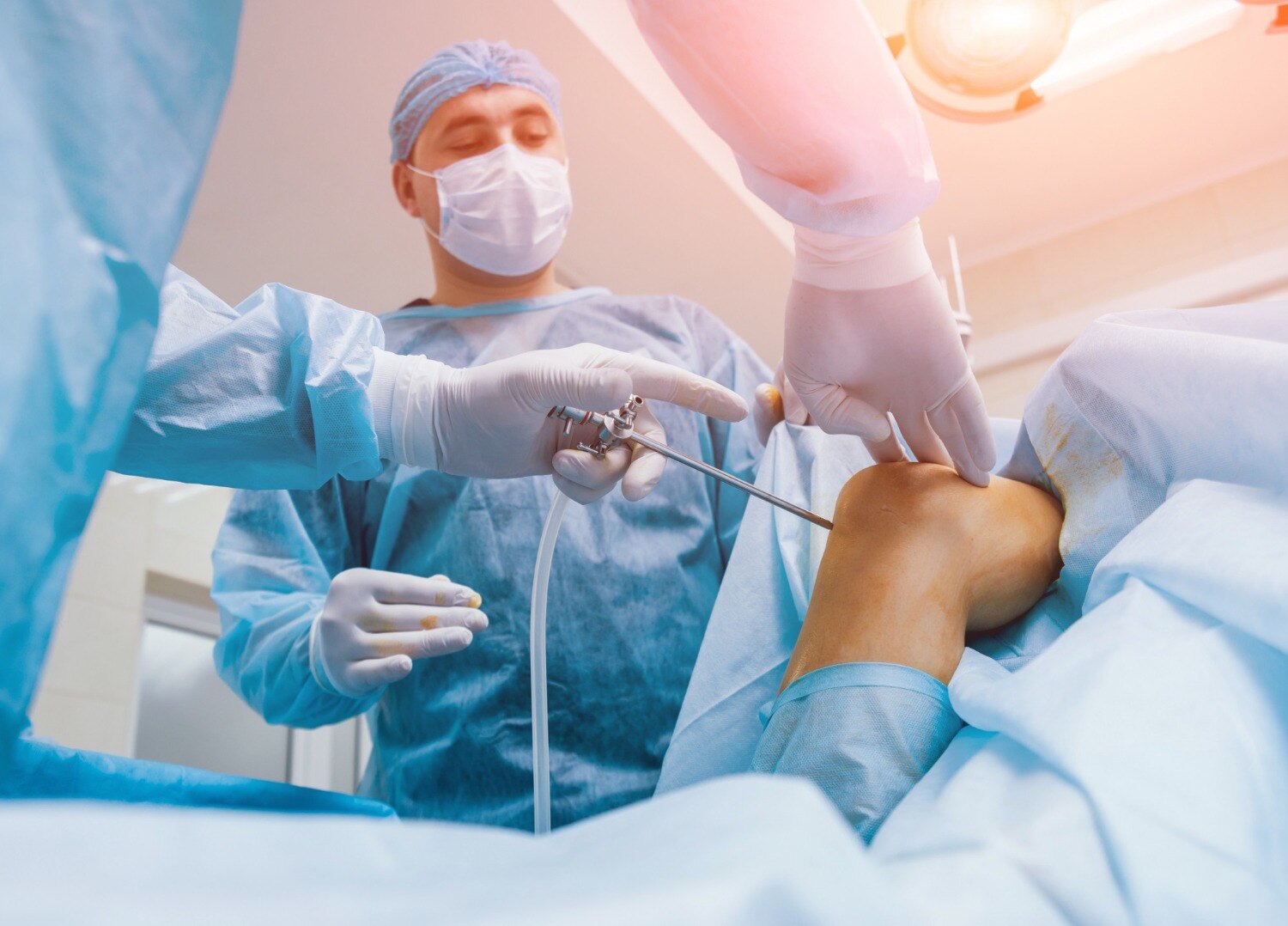
Diagnostic arthroscopy is the right operation when examination and imaging have not identified the pain source, yet symptoms suggest a problem inside the joint. A camera and narrow instruments allow inspection; the surgeon treats a confirmed injury during the same procedure only if your consent and operative plan allow it.
- Diagnostic arthroscopy identifies the problem when scans and clinical tests remain inconclusive. It is not a promise to repair every abnormality found.
- Arthroscopic repair restores a repairable structure, such as a meniscus, labrum or rotator cuff. Preserving meniscal tissue is preferred when the tear pattern can heal.
- Arthroscopic reconstruction replaces or rebuilds a damaged ligament, such as the ACL, when instability and activity goals justify that operation.
Arthroscopy suits a traumatic, mechanically treatable injury: a knee that locks after a twist, repeatedly gives way, or has a repairable tear. It is different from pain caused by advanced knee osteoarthritis or degenerative meniscal wear alone.
Lavage and debridement do not provide reliable long-term benefit for those conditions; physiotherapy, medication and activity changes usually deserve consideration first.
Arthroscopy is not the primary treatment for an infection or a fracture requiring fixation. An unstable locked knee needs separate clinical assessment and is not equivalent to general arthritis pain.
If you are searching for arthroscopy surgery in Pune, ask which of these three operations is proposed, what finding supports it, and what non-operative option remains.
What happens before and during arthroscopy?
Your pathway runs from an examination and imaging review to anesthesia, camera-guided treatment and a discharge plan.
1. The orthopedic assessment starts with how the injury happened, your pain and swelling, locking or giving-way, and previous treatment. The clinician checks joint movement and stability, then examines the skin, pulses and sensation.
2. X-rays assess bone alignment, fractures or arthritis. Order an MRI when the suspected meniscus, ligament, cartilage, tendon or labral injury needs clearer definition.
3. Before surgery, give the team a complete medicine list. Discuss blood thinners, diabetes treatment and allergies; the team orders blood tests when indicated, completes an anesthesia assessment and confirms the exact structure, procedure, side and operative site.
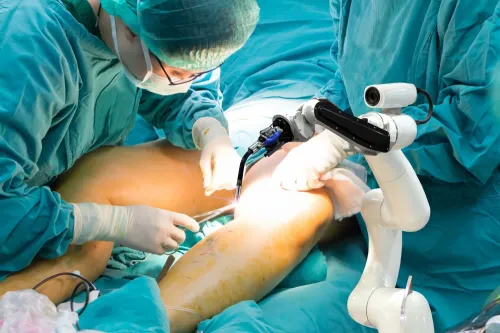
4. On the day, anesthesia may be regional, general or a combination selected for the operation and your health. Through small portal incisions, the surgeon fills the joint with sterile fluid, views it with a camera and passes narrow instruments through other portals.
5. The surgeon may repair or reconstruct tissue, remove unstable fragments or treat a cartilage defect. The consent discussion should cover infection, bleeding, blood clots, nerve or blood-vessel injury, stiffness, persistent symptoms and anesthesia complications.
6. Before discharge, confirm the dressing, pain-control plan, permitted weight-bearing, crutch or brace use, follow-up and physiotherapy. Arrange an escort home, or admission if your procedure or medical condition requires monitoring.
How does recovery differ after each procedure?
Small incisions do not guarantee a short recovery: the repaired ligament, meniscus, cartilage, tendon or labrum determines how much protection and rehabilitation you need.
| Procedure | Typical recovery demands | What controls progression |
|---|---|---|
| Diagnostic arthroscopy or limited trimming | Crutches may be needed briefly. Increase weight-bearing as pain and swelling allow, keep the dressing dry, and resume desk work when comfortable. | Drive only when you can control the vehicle safely and are no longer affected by sedating medicine. |
| ACL reconstruction | A brace, structured physiotherapy, progressive strength and balance work, and a gradual return to running and pivoting sport are common. | Strength, movement quality and surgeon testing—not a calendar promise—determine sports clearance. |
| Meniscus repair | Protected weight-bearing and restricted knee bending often last longer than after simple trimming, giving the repair time to heal. | Follow the surgeon’s limits even when pain improves quickly. |
| Shoulder stabilization or rotator-cuff repair | A sling and staged movement limits protect the repair. Regaining strength too quickly can damage healing tissue. | The physiotherapy plan sets when movement and strengthening advance. |
| Hip or ankle arthroscopy | Loading and range-of-motion rules differ by the treated structure and procedure. | Use the operative report and surgeon’s instructions for crutch removal and activity changes. |
The operative report and surgeon-led physiotherapy plan control stair use, driving, work, crutch removal and sport progression. Do not substitute a faster recovery from someone else’s arthroscopy for your own instructions.
Seek prompt assessment for fever, pus, increasing redness or warmth, or a painful swollen calf. Chest pain or breathlessness is an emergency.
How should you compare an arthroscopy hospital near Bibwewadi?
Choose the facility that can explain your treatment pathway, not the one that repeats “arthroscopy” most often. Compare an arthroscopy surgery hospital Bibwewadi, an arthroscopy hospital Kondhwa and other providers for arthroscopy surgery in Pune using these questions:
- Who will perform the operation, and what experience do they have with your injured joint?
- What exact diagnosis, procedure and operative side are proposed?
- Has physiotherapy, activity modification or medication been tried, and why is surgery now appropriate?
- How much weight-bearing, bracing and physiotherapy will recovery require?
- Who handles urgent pain, fever, bleeding or swelling after office hours?
| Check before admission | Ask the hospital to confirm | Why it matters |
|---|---|---|
| Identity and operation | Your name, procedure and operative side are verified | Prevents wrong-patient, wrong-procedure and wrong-side errors |
| Anaesthesia and clot risk | Your medical history, medicines and thromboembolism risk are assessed | Changes anaesthesia and prevention planning |
| Antibiotic policy | The named antibiotic, timing and indication are documented | A vague “antibiotic cover” is difficult to verify |
| Surgical preparation | The correct site is marked and prepared before incision | Reduces site and infection errors |
| Instruments | Sterilisation records and sterile handling are maintained | Contaminated instruments can cause infection |
| Discharge handoff | Medicines, restrictions, warning signs and follow-up are transferred clearly | Prevents gaps after leaving hospital |
Spire Hospital-Best Orthopedic Hospital in Pune is one local option for assessment and recovery support, but your examination-led diagnosis should decide care. The search phrase orthopedic doctor in puneia no ignore arthroscopy surgery hospital bibwewadi is not a medical diagnosis.
Related services
Orthopedic Treatments Best Arthroscopy Surgery Hospital in Bibwewadi, Dhankawadi, Market Yard, Kondhwa, Pune Spire Hospital is the Best Arthroscopy Surgery Hospital in Bibwewadi, Market Yard, Kondhwa, Undri, Swargate, Dhankawadi, Katraj, Ambegaon and Pune. View service → |
Orthopedic Surgeon Best Orthopedic Surgeon in Bibwewadi, Dhankawadi, Market Yard, Kondhwa, Pune Dr. Gaurav Pawar is a highly accomplished Orthopedic Surgeon, Hip and Knee Joint Replacement & Sports Injury (Arthroscopy) Surgeon in Bibwewadi,... View service → |
Frequently asked questions
Which joint injuries need an orthopedic assessment?
Seek assessment after a twisting injury if the joint locks, repeatedly gives way, remains swollen, cannot bear weight, loses movement or causes persistent pain. Improving pain with normal movement and no instability may indicate a mild sprain, but worsening symptoms need examination.
When is arthroscopy the right operation?
Arthroscopy can suit problems inside a joint, such as a torn meniscus, selected ligament injuries, loose cartilage or a damaged joint lining. It is not the right choice for every injury; the diagnosis, imaging, joint damage and treatment alternatives determine the operation.
What happens before and during arthroscopy?
Before surgery, the orthopedic team confirms the diagnosis, reviews scans, checks your medicines and medical history, explains anesthesia and obtains consent. During arthroscopy, a camera enters through a small incision so the surgeon can inspect and treat the joint through additional small portals.
How does recovery differ after each procedure?
Recovery depends on what the surgeon repairs, not only on the small incisions. Simple inspection or minor tissue treatment usually allows earlier movement, while ligament reconstruction, meniscus repair or cartilage procedures require longer protection, physiotherapy and restrictions on weight-bearing.
How should you compare an arthroscopy hospital near Bibwewadi?
Check whether the hospital provides orthopedic assessment, appropriate imaging, anesthesia, arthroscopy equipment, infection-control procedures, physiotherapy and planned follow-up. Ask who will manage complications and whether the hospital can support your procedure from diagnosis through rehabilitation.
Related service
Orthopedic Treatments Best Sports Injury Treatment Specialist in Bibwewadi, Dhankawadi, Market Yard, Kondhwa, Pune Dr. Gaurav Pawar is one of the leading and best Best Sports Injury Treatment specialists at Spire Hospital in Bibwewadi, Pune. View service → |
Keywords