Persistent knee pain does not automatically mean you need a total replacement or robotic assistance. You will be able to judge whether an evaluation is warranted, understand how robotic surgery differs from other techniques, and compare surgeons, treatment choices and recovery support using specific questions.
Key takeaways
- Persistent pain, deformity and limited movement justify a replacement evaluation.
- Robotic assistance supports surgical planning but does not replace surgeon judgment.
- Compare implant options, hospital standards, rehabilitation plans and follow-up access.
- Bring X-rays, medication details and a written list of daily limitations.
Do your knee problems justify a replacement evaluation?
A replacement evaluation is justified when knee pain persists despite medicines, physiotherapy or injections and limits walking, climbing stairs, work or sleep. Night pain, visible deformity, stiffness, reduced range of motion and an X-ray showing osteoarthritis strengthen the case for an orthopedic assessment.
| Finding | What it suggests | Usual next step |
|---|---|---|
| Persistent pain with walking or stairs | Function is being significantly affected | Review non-surgical treatment and surgical options |
| Night pain, deformity or severe stiffness | Advanced joint damage is possible | Examine alignment, stability and knee movement |
| Osteoarthritis on X-ray | Cartilage and joint surfaces may be damaged | Match imaging with symptoms; do not operate on the image alone |
| Pain with mild X-ray changes | Another pain source or diagnosis is possible | Assess the hip, spine, tendons and nerves |
An X-ray, an arthritis diagnosis or a particular age does not decide surgery. Hip arthritis and lumbar spine disease can refer pain to the knee, so ask an orthopedic doctor in Pune to confirm where the pain originates and whether rehabilitation remains worthwhile.
Delay or avoid total knee replacement as the first choice when arthritis is mild, pain is short-term and treatable, or you have not tried a structured rehabilitation plan. Treat infection around the knee before elective surgery, and stabilise poorly controlled diabetes, smoking, anemia, obesity-related risk or another medical condition first.
Untreated dental or skin infection also requires attention because infection can threaten the implant.
What does robotic knee replacement change during the operation?
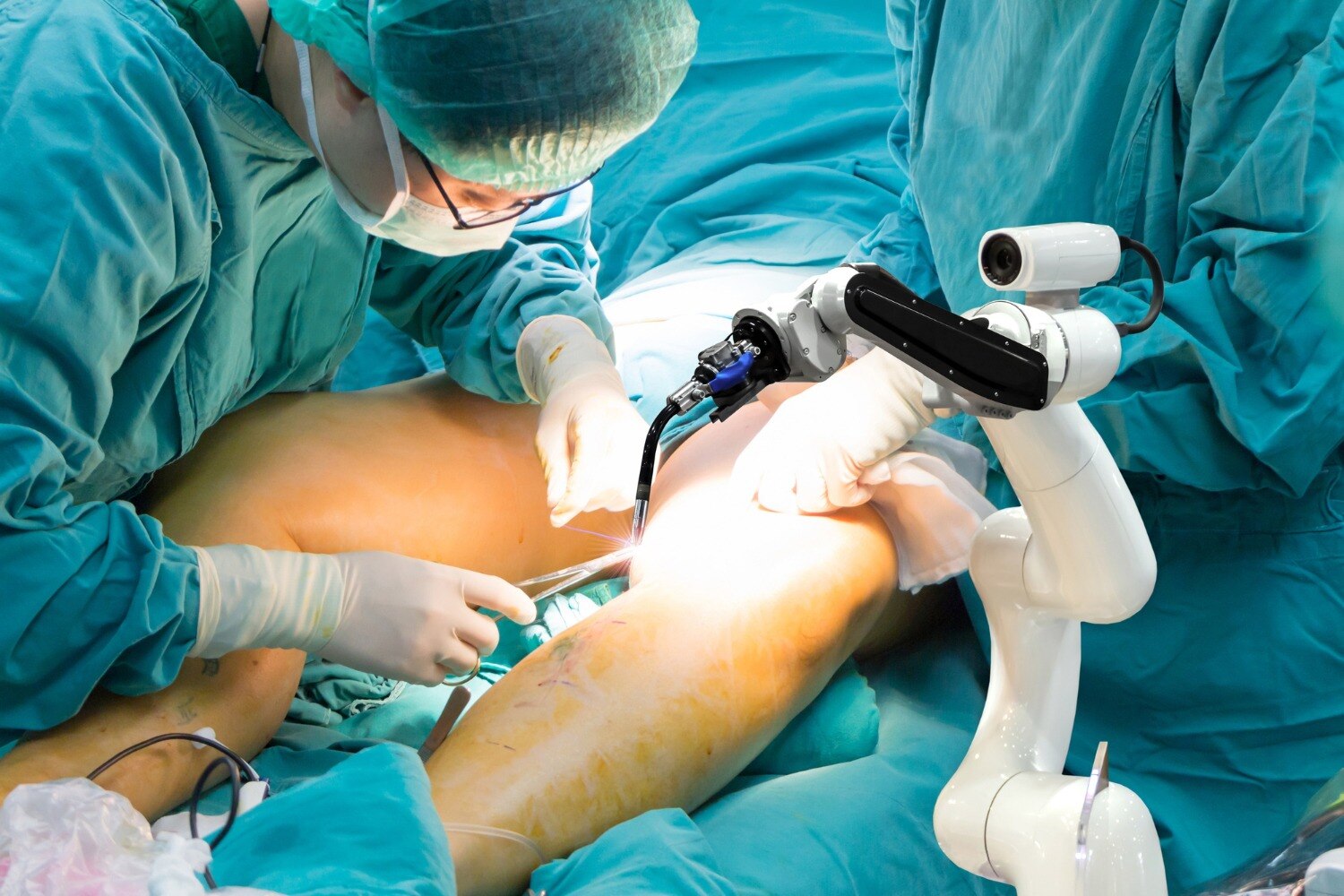
Robotic assistance changes planning and bone preparation, not who makes the surgical decisions. The surgeon uses a CT scan or other imaging to create a three-dimensional model, selects planned bone cuts and implant positions, then uses the system during surgery for guidance or constrained bone preparation.
- Review the three-dimensional plan and adjust it for your deformity, ligament balance and bone condition.
- Position the knee and register the anatomy with the robotic system.
- Make the planned cuts with guided instruments or a controlled cutting tool.
- Check alignment, stability and range of motion with trial components before inserting the final implant.
The robot does not diagnose your knee, choose the operation independently or perform the replacement without the surgeon. A robotic knee replacement surgeon for Bibwewadi remains responsible for judgment, positioning and managing unexpected findings.
| Method | Main difference | Potential trade-off |
|---|---|---|
| Manual replacement | Surgeon uses instruments and visual landmarks | Less planning technology, with greater reliance on technique |
| Computer navigation | Sensors track alignment during surgery | Guides positioning but does not necessarily control bone cutting |
| Robotic-assisted replacement | Three-dimensional planning plus guided or constrained preparation | Added planning, equipment and procedure costs |
Robotic systems can improve reproduction of planned alignment and reduce alignment outliers. Evidence is less certain that they produce better long-term pain relief, function, complication rates or implant survival.
Robotic assistance cannot prevent positioning errors, infection, clots, stiffness or implant problems, and it does not suit every knee. A smaller incision describes an approach, not robotic surgery; ask which technology actually guides the operation.
Which treatment and replacement type fits your knee?
Replacement is not automatic: choose non-operative care, partial replacement or total replacement based on pain, function, examination, ligament stability, range of motion and imaging—not age or an X-ray alone.
| Option | What it means | When it applies |
|---|---|---|
| Non-operative care | Physiotherapy, weight management, medicines, injections and a walking aid | Mild damage, treatable pain, or no completed rehabilitation plan |
| Partial knee replacement | Replaces one damaged compartment while preserving the rest of the knee | Arthritis is confined to one compartment; ligaments work, the knee is stable, motion is acceptable, deformity is limited and activity goals suit the procedure |
| Total knee replacement | Replaces damaged joint surfaces with metal and plastic components | Pain, stiffness or deformity substantially limits life after non-surgical treatment has failed |
A partial replacement is a poor fit when arthritis affects multiple compartments, ligaments are deficient, deformity is substantial or motion is severely restricted. In a total replacement, the surgeon decides during surgery whether to resurface the patella. The aim is pain relief and better function, not a disease-free or completely normal knee.
Before choosing total knee replacement Bibwewadi, optimise diabetes, anemia, smoking, weight, dental or skin infections and other medical risks. Ask about infection, bleeding, clots, nerve or blood-vessel injury, stiffness, instability, loosening, wear, fracture, persistent pain and revision surgery. A technically accurate implant cannot guarantee relief if pain comes from the hip, spine or another source.
How should you compare a local surgeon and hospital?
“robotic knee replacement surgeon for bibwewadi” describes a service search, not a separate qualification. Verify the surgeon’s orthopedic training, medical registration, experience with primary and revision knee arthroplasty, and whether that surgeon will personally operate the robotic system.
Compare the clinical pathway, not only a knee replacement surgeon kondhwa with a total knee replacement bibwewadi label. Ask these questions:
- What implant is planned, and is it registered for use in India?
- Which robotic system is used, and what finding makes it appropriate for your knee?
- Who provides anesthesia, emergency care and treatment if infection, bleeding or a clot occurs?
- How long is the expected stay, and who delivers physiotherapy after discharge?
- Who reviews you after surgery, and where are loosening, instability, infection or other complications treated?
- Does the hospital offer a revision pathway if the implant later fails?
| Checkpoint | What to compare | Question to ask |
|---|---|---|
| Surgeon | Training and primary/revision experience | Who performs the operation? |
| Technology | Robotic planning, equipment and indication | What does the system add for my imaging and deformity? |
| Safety | Infection, blood-clot and emergency protocols | What happens if a complication develops? |
| Recovery | Stay, physiotherapy and follow-up access | Who coordinates rehabilitation after discharge? |
Spire Hospital-Best Orthopedic Hospital in Pune may suit a Bibwewadi resident if its treating team links the robotic recommendation to your imaging, ligament status, deformity, activity goals and medical risks. Treat “robotic” as a tool to assess, not an automatic guarantee of better pain relief or implant survival.
What should you bring, ask and expect after consultation?
Bring these items to your appointment with an orthopedic doctor in Pune:
- Previous X-rays, MRI reports and scan discs
- A complete medicine and allergy list
- Your medical history and diabetes records
- Details of prior knee operations
- A written account of pain location, night symptoms, walking distance, stair difficulty, range-of-motion limits and treatments that failed
Ask these questions before choosing surgery:
- Which implant is planned, and why does it suit your knee?
- Why is robotic assistance recommended for your knee?
- Who will operate the robotic system?
- What hospital stay, pain-control plan and blood-clot prevention will you use?
- How will wound care and rehabilitation be managed?
- What evidence supports the implant’s survivorship?
- What revision options exist if it loosens, wears or becomes unstable?
| Approach | What happens | What to compare |
|---|---|---|
| Manual replacement | The surgeon prepares bone and positions implants using standard instruments | Training, judgment and results |
| Computer-assisted replacement | Sensors or navigation guide alignment during surgery | Accuracy, equipment and evidence |
| Robotic-assisted replacement | Imaging supports planning; the surgeon uses the system for guided or constrained bone preparation | Indication, alignment evidence and long-term outcomes |
Robotic assistance is not autonomous: the surgeon remains in control. Early mobilisation and an individual rehabilitation programme support recovery. Walking and basic activities often improve first; swelling, strength, motion and confidence can change for months.
Seek prompt medical assessment for fever, wound drainage, worsening calf swelling, severe pain or breathlessness.
Frequently asked questions
When should you seek a knee replacement evaluation?
Seek an evaluation when knee pain continues despite medicines, physiotherapy or injections and disrupts walking, stairs, work or sleep. Night pain, deformity, stiffness, reduced movement and osteoarthritis on X-ray add weight to the decision.
What does robotic assistance change during knee replacement?
Robotic systems help the surgeon plan bone cuts, balance the knee and position components using patient-specific imaging or measurements. The surgeon still performs and controls the operation.
How do you choose between partial and total knee replacement?
The choice depends on which compartments are damaged, ligament condition, deformity, movement and activity goals. A total replacement treats disease across the knee; a partial replacement is limited to one compartment when the rest of the knee remains suitable.
What should you compare when choosing a knee replacement surgeon and hospital?
Compare the surgeon’s experience with your diagnosis, implant explanation, infection-control practices, anesthesia support, physiotherapy access, emergency arrangements and follow-up schedule.
What should you bring to a knee replacement consultation?
Bring recent X-rays or scans, medication and injection records, previous treatment details, medical conditions, allergy information and a list of activities that pain prevents.
Keywords