
A knee replacement decision depends on more than an X-ray or a promise of easier walking. You will learn what the operation replaces, when it fits your symptoms, which benefits are realistic, how recovery works, and which questions help you compare surgeons in Pune.
Key takeaways
- Replacement resurfaces damaged joint surfaces; it does not replace the entire knee.
- Consider assessment when pain, stiffness, and imaging findings limit daily activities.
- Compare surgeons by training, implant explanation, complication planning, and rehabilitation support.
- Discuss medicines, diabetes, weight, infection risk, and recovery milestones before surgery.
What does total knee replacement replace, and when are alternatives better?
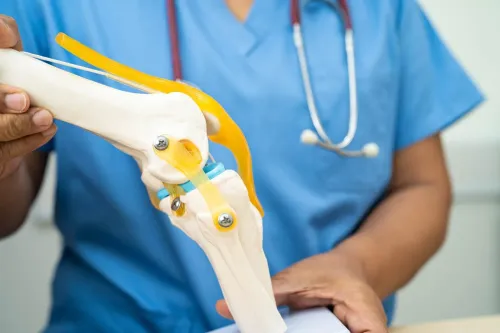
Total knee replacement resurfaces the damaged ends of the femur and tibia with metal components separated by a plastic spacer. The surgeon may resurface the patella when its cartilage is significantly damaged, and may retain or substitute the posterior cruciate ligament according to the implant design and your anatomy.
| Option | What it changes | When it may be better |
|---|---|---|
| Total replacement | Resurfaces the arthritic knee compartments | Substantial pain and functional loss persist after conservative care, with advanced arthritis on standing X-rays |
| Partial replacement | Replaces one damaged compartment while preserving healthy compartments | Arthritis is limited to one compartment and the remaining ligaments and surfaces are suitable |
| Osteotomy | Realigns the leg to shift load away from damaged cartilage | Younger, active patients have suitable alignment and arthritis in a limited area |
| Injections, physiotherapy, medicines or weight management | Controls symptoms, improves strength or reduces joint load without replacing surfaces | Symptoms remain manageable, or surgery is premature or unsuitable |
| Continued nonoperative care | Maintains activity and symptom control without an operation | Pain and function remain acceptable |
An X-ray does not make the decision by itself. Hip disease, referred pain, inflammatory arthritis, infection, fracture or a ligament-dominant sports injury can require different treatment, so examination and history matter. Total replacement becomes reasonable when pain affects walking, stairs, sleep or independence despite treatment.
“total knee replacement benefits Bibwewadi” describes a local search need, not a separate operation.
What findings show that you need a proper knee replacement assessment?
Persistent night pain, pain during ordinary walking or stairs, swelling, reduced bending or straightening, or a bow-legged or knock-kneed deformity warrants an orthopedic assessment. Seek review when exercise, medicines or injections no longer let you bathe, dress, shop, work or move independently. An X-ray alone does not decide whether replacement is appropriate.
- Share your medical history, pain pattern, walking limits, activity goals and previous treatment, including physiotherapy, medicines and injections.
- Expect examination of your gait, leg alignment, knee motion, swelling and ligament stability. The doctor will also check whether hip disease, referred pain, inflammatory arthritis, infection, fracture or a ligament-dominant sports injury explains the symptoms.
- Have standing, weight-bearing knee X-rays. They can show narrowed or lost joint space, bone spurs and deformity under load.
- Discuss your age, weight, diabetes, heart disease, smoking, skin condition, dental or other infections, medicines and prior operations. These findings determine whether surgery fits now or preoperative optimisation comes first.
MRI is not routinely needed for typical end-stage osteoarthritis when examination and weight-bearing X-rays answer the clinical question. MRI or other tests become useful when another diagnosis remains possible.
An orthopedic doctor in Pune should connect the findings rather than sell an operation from an image. Search wording such as “total knee replacement surgeon benefits orthopedic for doctor in pune” does not replace this assessment: it helps determine whether replacement is timely, preparation is needed, or a different treatment is safer.
Which benefits are realistic after total knee replacement?
The measurable gains are less arthritis pain, longer walking tolerance, easier stair use, improved sleep and greater independence with bathing, dressing, shopping and household tasks. The aim is useful function, not a normal young knee.
Standing and walking with assistance soon after surgery supports function and reduces problems linked to prolonged immobility. Recovery is staged: swelling, stiffness and disrupted sleep can last for weeks; many people resume ordinary activities in about 6 to 12 weeks, while strength, confidence and final function improve for several months.
Your rehabilitation plan should focus on:
- Prehabilitation and physiotherapy that build quadriceps strength.
- Restoring knee extension and flexion, especially when the knee was stiff before surgery.
- Practising gait, balance and safe progression from supported walking to ordinary activity.
| Benefit | What improvement may look like | What not to expect |
|---|---|---|
| Pain relief | Less arthritis pain during walking, stairs and rest; better sleep | Removal of every ache or pain from another condition |
| Daily function | More independence with bathing, dressing, shopping and household tasks | Immediate return to all activities |
| Mobility | Longer walks, steadier gait and easier stair use | Guaranteed high-impact sports performance |
| Early movement | Earlier standing and assisted walking after surgery | A recovery without swelling, stiffness or fatigue |
Low fitness, diabetes, excess weight, preoperative stiffness and inconsistent rehabilitation can affect the result. Evaluate these practical knee replacement recovery benefits in Pune, rather than trusting a promise of instant recovery.
How should you compare total knee replacement surgeons in Pune?
Compare a joint replacement surgeon in Pune on decisions you can verify, not on location or marketing language. Ask about relevant orthopedic training, annual primary knee-replacement volume, and who will perform each part of the operation.
- Request the proposed implant brand and model, fixation method, alignment plan, and ligament-balancing method. Ask whether a smaller-incision approach still allows accurate component positioning and safe soft-tissue handling.
- Ask for the infection-prevention protocol, blood-management plan, pain-control plan, expected activity restrictions, and physiotherapy arrangements.
- Clarify the complication and revision policy, who handles routine follow-up, and whom you contact for wound problems or emergencies after discharge.
| Criterion | Questions to ask | Why it matters |
|---|---|---|
| Diagnosis | What alternatives fit my examination, X-rays, symptoms and goals? | Prevents surgery based on an X-ray alone. |
| Clot prevention | Will I need an anticoagulant, aspirin, compression or early movement? | Blood-thinning treatment must match your clot and bleeding risks; do not choose a drug or dose yourself. |
| Rehabilitation | When will I stand, walk, drive and use stairs? Who supervises therapy? | A written progression exposes gaps in recovery support. |
| Results and revisions | What complications do you track, and who manages a failed or revised implant? | You hear the service’s plan beyond the operation. |
Use the same checklist to assess Spire Hospital-Best Orthopedic Hospital in Pune. The benefit of an experienced service is sound diagnosis, transparent alternatives, careful planning and coordinated rehabilitation—not a guarantee of a particular outcome.
Related services
Orthopedic Surgeon Total Knee Replacement Surgeon in Bibwewadi, Dhankawadi, Market Yard, Kondhwa, Pune Are you looking for the best total knee replacement surgeon in Pune? At Spire Hospital, Dr. View service → |
Orthopedic Treatments Best Joint/Knee Replacement Surgery Hospital in Bibwewadi, Dhankawadi, Market Yard, Kondhwa, Pune Advanced Joint Replacement Care by Dr. Gaurav Pawar At Spire Hospital, Pune, we provide world-class Joint Replacement Surgery under the expert... View service → |
What risks and preparation should you discuss before surgery?
Infection, blood clots and bleeding are important risks of total knee replacement, alongside nerve or blood-vessel injury. Persistent pain or stiffness, instability, implant wear, loosening and eventual revision are also possible, so expected benefits must be weighed against the recovery and long-term uncertainty.
1. Ask which risks apply to you. Discuss heart disease, obesity, smoking, uncontrolled diabetes, poor skin condition and any previous joint or wound infection. These factors can change the timing, antibiotic plan, blood-clot prevention and discharge arrangements.
2. Optimise your health before surgery. Improve blood-glucose control, stop smoking, treat active skin, dental or other infections, and give the surgeon a complete list of medicines, including blood thinners, diabetes tablets and supplements. Do not stop prescribed medication without instructions.
3. Prepare the knee and body. Build quadriceps strength and practise knee extension, bending, walking aids and safe exercises. Limited straightening before surgery can increase the attention needed to prevent postoperative stiffness.
4. Confirm the recovery plan. Ask who provides physiotherapy, when you should stand and walk, how wound concerns are handled, who answers urgent questions and when follow-up occurs.
Early swelling, bruising, discomfort and stiffness are expected. Seek urgent review for fever, wound drainage, increasing calf swelling or sudden breathlessness. The recommendation should fit your symptoms, examination, imaging, health risks, goals and willingness to rehabilitate—not an X-ray alone or a promise of pain-free, high-impact activity.
Frequently asked questions
What does total knee replacement replace?
It resurfaces the damaged ends of the femur and tibia with metal components and a plastic spacer. The surgeon may also resurface the patella and retain or substitute the posterior cruciate ligament.
When are alternatives to total knee replacement better?
Alternatives may suit you when damage is limited, symptoms remain manageable, or targeted treatment can preserve more of the natural joint. Your examination and imaging determine the choice.
Which findings support a total knee replacement assessment?
Persistent pain, stiffness, reduced walking or stair ability, failed non-surgical treatment, and X-rays showing advanced joint damage justify a detailed assessment.
What benefits are realistic after total knee replacement?
Many patients seek less arthritis pain, improved walking, better stair tolerance, and greater independence. Recovery takes time, and the operation does not restore a completely natural knee.
How should you compare total knee replacement surgeons in Pune?
Ask about relevant surgical experience, implant options, complication management, hospital support, rehabilitation planning, expected restrictions, and follow-up appointments.
Keywords