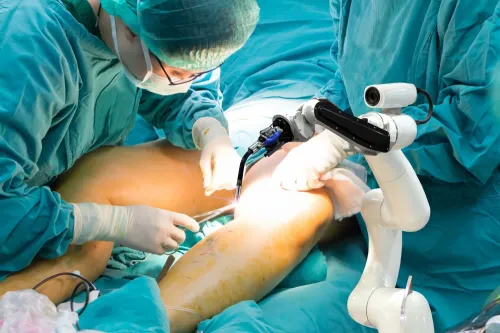
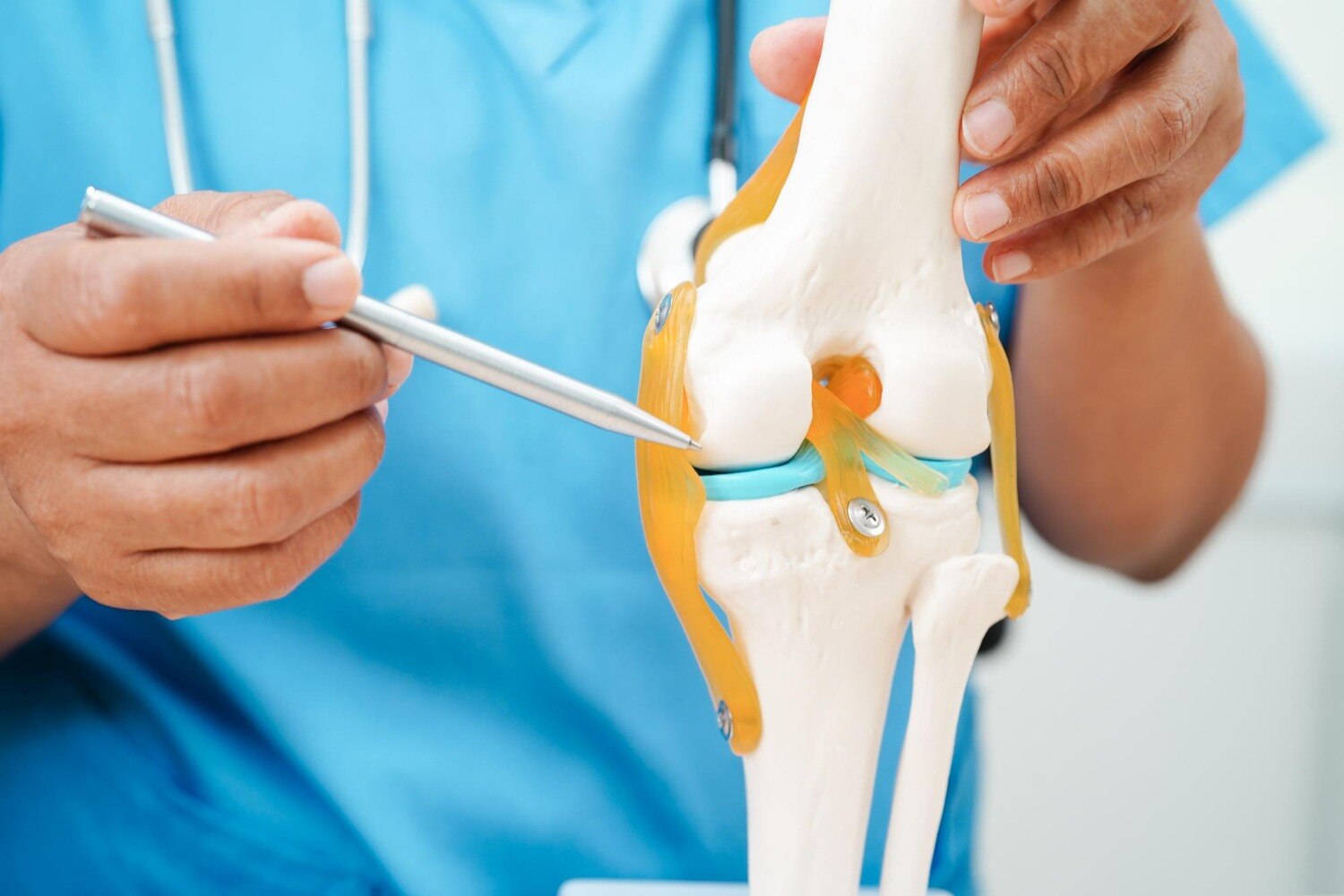
Pain, swelling, stiffness, clicking or trouble walking after knee replacement can reflect normal recovery, a complication, or a problem outside the knee. You will learn how to triage symptoms, prepare for review, understand the tests a specialist may choose, and compare follow-up care in Bibwewadi and nearby Pune hospitals.
Key takeaways
- Seek emergency care for breathlessness, chest pain, a cold foot, or uncontrolled bleeding.
- Report fever, wound drainage, worsening redness, or calf swelling promptly.
- Persistent pain, stiffness, or clicking needs a cause-based review.
- Take surgical records and implant details to your follow-up appointment.
Which Symptoms After Knee Replacement Need Emergency Care?
Sudden breathlessness, chest pain, confusion, coughing with severe breathing difficulty, a cold or pale foot, uncontrolled bleeding, or inability to bear weight require emergency services or an emergency department. Do not wait for a clinic appointment: these signs can indicate pulmonary embolism, impaired circulation, fracture, or serious infection.
| Urgency | Symptoms after knee replacement | Action |
|---|---|---|
| Emergency now | Sudden breathlessness, chest pain, confusion, severe breathing difficulty, cold or pale foot, uncontrolled bleeding, or inability to bear weight | Call emergency services or go to an emergency department |
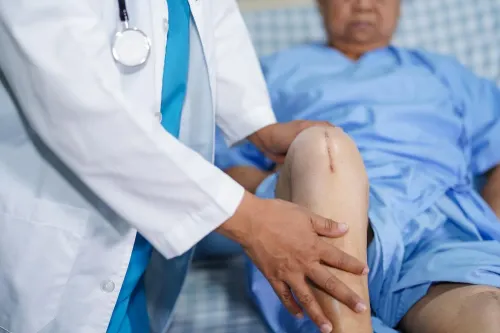
| Same-week orthopedic review | Increasing pain, spreading redness, wound drainage, fever, chills, one-sided calf swelling or pain, new numbness, worsening stiffness, instability, or loss of movement | Arrange prompt assessment by a joint-replacement specialist |
| Routine follow-up | Expected soreness, bruising, swelling, sleep disruption, and gradually improving movement without new warning signs | Attend your planned knee replacement follow-up in Bibwewadi |
Ask for emergency transport when breathing or circulation is affected. Do not drive yourself if you cannot walk safely, have severe pain, or have any breathing symptom. A general orthopedic doctor in Pune appointment is not a substitute for emergency care when a clot, pulmonary embolism, fracture, or serious infection is possible.
If you are searching for a joint replacement surgeon in Bibwewadi for problems after knee surgery, use the same urgency guide before arranging a consultation.
How to Tell Normal Recovery From Infection or a Blood Clot
Bruising, swelling, sleep disruption, temporary pain and reduced knee motion can occur as walking, strength and range-of-motion exercises progress over several months.
The key is direction: improvement may be slow, but worsening symptoms after initial progress, a plateau that stops exercise, or renewed loss of function needs assessment rather than routine physiotherapy or a routine knee replacement follow up bibwewadi.
- Check the wound and symptoms each day. Worsening pain, spreading redness, fever, chills, wound discharge, persistent drainage, a newly draining sinus or wound breakdown needs prompt orthopedic review. A normal-looking incision does not exclude infection deeper around the joint.
- Compare both legs. One-sided calf swelling, warmth or pain raises concern for deep-vein thrombosis. Sudden chest pain or shortness of breath may indicate pulmonary embolism: seek emergency care immediately.
- Protect the recovery. Do not hide drainage under a dressing, force exercises through severe pain, apply unapproved heat to a swollen incision, miss prescribed medicines or self-start antibiotics.
- Continue medicines exactly as prescribed. Do not stop anticoagulants, antibiotics or pain medicines without the treating clinician’s instruction.
Temporary stiffness or swelling alone does not prove implant failure, but deterioration does. Contact the surgical team or a joint-replacement specialist promptly when symptoms change, and use emergency services for breathing or chest symptoms rather than travelling to an appointment.
What Happens During a Knee Replacement Problem Assessment?
A routine post-operative follow-up checks expected healing, exercise progress and medication needs. A new surgical consultation investigates a complication such as infection, loosening, fracture, instability or severe stiffness, especially when the original surgeon is unavailable or you seek a second opinion.
Bring these records:
- Operation report and implant or prosthesis card
- Discharge summary and complete medication list
- Physiotherapy notes and recent standing knee X-rays
- Wound photographs and a dated timeline of pain, fever, swelling, drainage and movement changes
| Assessment type | What the surgeon looks for | Typical purpose |
|---|---|---|
| Examination | Incision, temperature, swelling, range of motion, walking pattern, ligament stability, pulses, sensation, nerve function and prescribed exercises | Identify patterns requiring tests or urgent treatment |
| Standing X-rays | Alignment, fracture and obvious loosening | Assess persistent pain or reduced function |
| Blood tests | CBC, ESR and CRP | Support an infection work-up; they cannot prove or exclude infection alone |
Testing follows your symptoms, not a fixed checklist. Ultrasound can assess a suspected clot or selected soft-tissue problem, while CT can clarify component position, rotation or fracture. If infection is suspected, joint aspiration can provide synovial-fluid cell count, differential and culture.
If you are stable, do not self-start antibiotics before sampling because cultures can become falsely negative. Septic or unstable patients need urgent treatment first. Aspiration or manipulation requires the clinician to assess timing, risks and the safest setting. A joint replacement surgeon in Pune should explain what each test will change.
Why Persistent Pain, Stiffness or Clicking Needs a Cause-Based Review
Persistent pain after knee replacement does not automatically mean you need revision surgery. A cause-based review checks for infection, implant loosening, malalignment, instability, scar tissue, patellar or extensor-mechanism problems, fracture, nerve irritation, and referred pain from the hip, spine or vascular system.
Clicking alone does not prove implant failure. Normal X-rays also do not justify delaying review when pain, swelling, stiffness or loss of function continues; standing radiographs may need to be supplemented by blood tests, aspiration, CT or ultrasound.
| Finding | Possible cause | Possible next step |
|---|---|---|
| Pain with looseness or abnormal alignment | Loosening, malalignment or instability | Weight-bearing X-rays, selected CT and stability examination |
| Fever, drainage or persistent worsening pain | Infection | CBC, ESR, CRP and joint-fluid aspiration when indicated |
| Limited bending | Scar tissue, infection, component position or pain | Physiotherapy review, manipulation, scar-tissue release or revision |
| Pain with normal knee imaging | Hip, spine, nerve or vascular referral | Examination beyond the knee and targeted testing |
Stiffness is not simply a request to exercise harder. Manipulation under anesthesia, arthroscopic or open scar-tissue release, or revision depends on timing, cause and risk.
Ask:
- What is the likely cause, and which tests are necessary?
- Should physiotherapy continue or change?
- What are the medication and weight-bearing limits?
- When would admission be necessary?
Revision is more complex because bone loss, scar tissue or weak ligaments may require implant removal, stems, augments or bone graft. Seek a second opinion for persistent pain, suspected infection, limited bending, instability or a proposed revision.
How to Choose Follow-Up Care in Bibwewadi or Near Kondhwa
Choose by capability, not by the search label. For a joint replacement surgeon in Pune or a joint replacement hospital Kondhwa, verify the clinician’s medical registration, orthopedic training, and experience assessing revision cases and suspected implant infection.
| Option | What to verify | Why it matters |
|---|---|---|
| Clinician | Registration number, orthopedic qualification, revision and infection experience | A painful knee does not automatically need revision surgery |
| Testing | Standing radiographs, CBC, ESR, CRP, joint-fluid aspiration, cell count, culture and microbiology | Infection, loosening, fracture and alignment problems need different evidence |
| Imaging | Ultrasound and CT when indicated | Ultrasound can assess a suspected clot; CT can clarify component position or fracture |
| Care pathway | Physiotherapy coordination, wound review and emergency escalation | Recovery can stall if exercises, wound care or urgent treatment are disconnected |
| Access | Operating surgeon or another joint-replacement specialist, plus an after-hours contact | New drainage, fever or sudden deterioration should not wait for a routine slot |
A knee replacement follow-up in Bibwewadi should use the operation report, implant card, discharge summary, medication list, physiotherapy notes and prior X-rays. If the original surgeon is unavailable, or you want a second opinion, book a new surgical consultation rather than treating it as routine monitoring.
Plan for travel time, safe transport, repeat visits, blood tests, imaging, physiotherapy, wound care and possible readmission. Spire Hospital-Best Orthopedic Hospital in Pune is one local option to ask about these specific services; its name or location does not prove suitability. Compare the answers you receive.
Related services
Orthopedic Treatments Best Joint/Knee Replacement Surgery Hospital in Bibwewadi, Dhankawadi, Market Yard, Kondhwa, Pune Advanced Joint Replacement Care by Dr. Gaurav Pawar At Spire Hospital, Pune, we provide world-class Joint Replacement Surgery under the expert... View service → |
Orthopedic Surgeon Total Knee Replacement Surgeon in Bibwewadi, Dhankawadi, Market Yard, Kondhwa, Pune Are you looking for the best total knee replacement surgeon in Pune? At Spire Hospital, Dr. View service → |
Frequently asked questions
Which symptoms after knee replacement need emergency care?
Seek emergency services for sudden breathlessness, chest pain, confusion, severe breathing difficulty, a cold or pale foot, uncontrolled bleeding, or inability to bear weight.
How can you tell normal recovery from infection or a blood clot?
Worsening wound redness, drainage, fever, increasing pain, or calf swelling needs prompt assessment. Severe breathing difficulty or chest pain requires emergency care.
What happens during a knee replacement problem assessment?
The clinician reviews your symptoms, surgical history and recovery timeline, examines the knee and circulation, and orders tests when needed to identify infection, clot, fracture, loosening, or another cause.
Why do persistent pain, stiffness, or clicking need a cause-based review?
These symptoms can result from different problems, so treatment depends on the cause rather than the symptom alone. A review helps determine the next step.
How should you choose follow-up care in Bibwewadi or near Kondhwa?
Choose a facility that can examine knee replacements, review imaging and surgical records, assess urgent complications, and coordinate specialist treatment when required.
Related services
Orthopedic Surgeon Best Orthopedic Surgeon in Bibwewadi, Dhankawadi, Market Yard, Kondhwa, Pune Dr. Gaurav Pawar is a highly accomplished Orthopedic Surgeon, Hip and Knee Joint Replacement & Sports Injury (Arthroscopy) Surgeon in Bibwewadi,... View service → |
Orthopedic Surgeon Best Orthopedic Doctor in Bibwewadi, Dhankawadi, Market Yard, Kondhwa, Pune Dr. Gaurav Pawar is the Best Orthopedic Doctor, Orthopedic Consultant, Orthopedic Expert, Orthopedic Doctor in Bibwewadi, Market Yard, Kondhwa,... View service → |
Orthopedic Treatments Best Foot, Ankle & Shoulder Treatment Hospital in Bibwewadi, Dhankawadi, Market Yard, Kondhwa, Pune At Spire Hospital Bibwewadi, Pune, we specialize in providing advanced and comprehensive care for foot, ankle, and shoulder conditions. Led by Dr. View service → |
Keywords